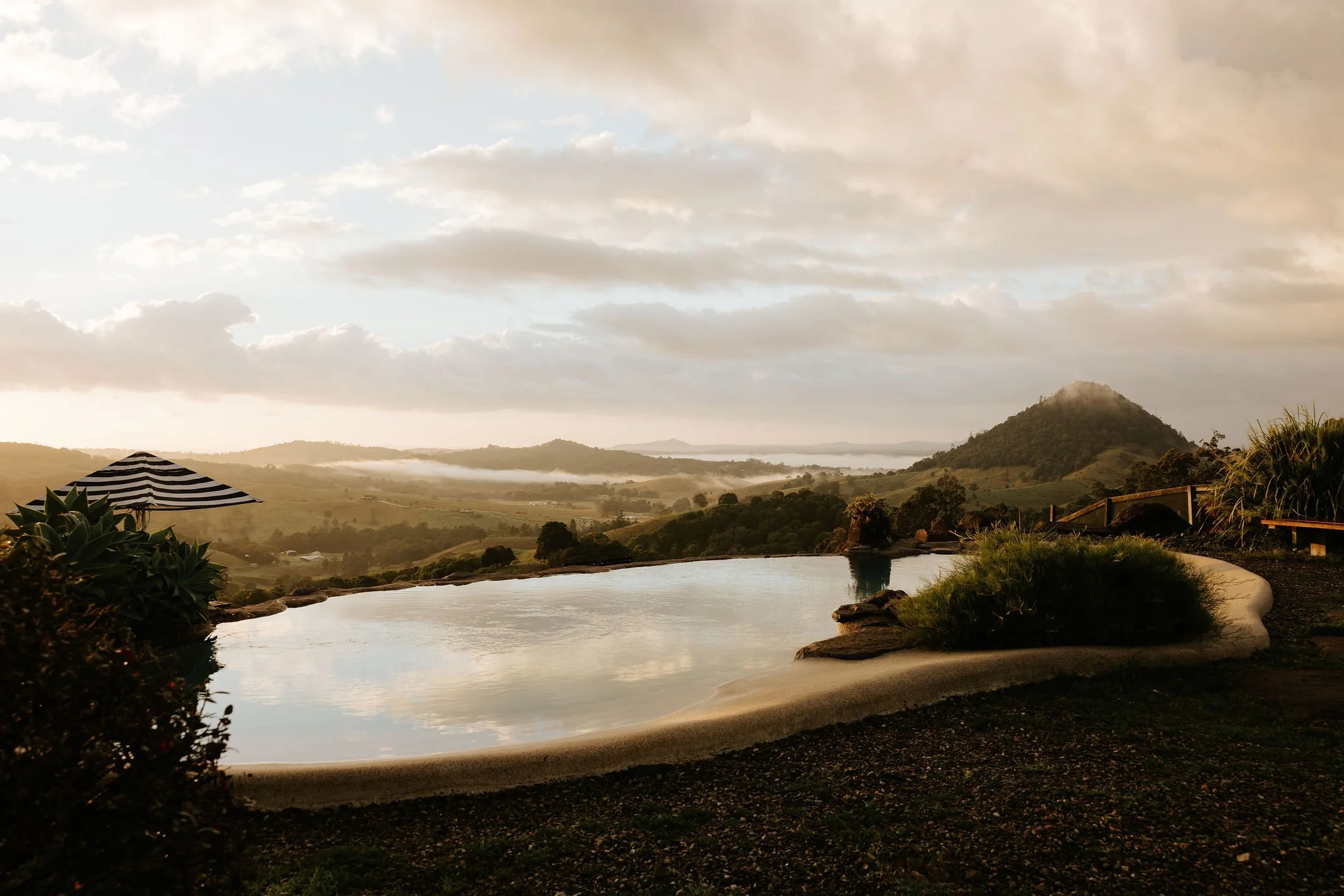
Let Rosecliffe unwind you
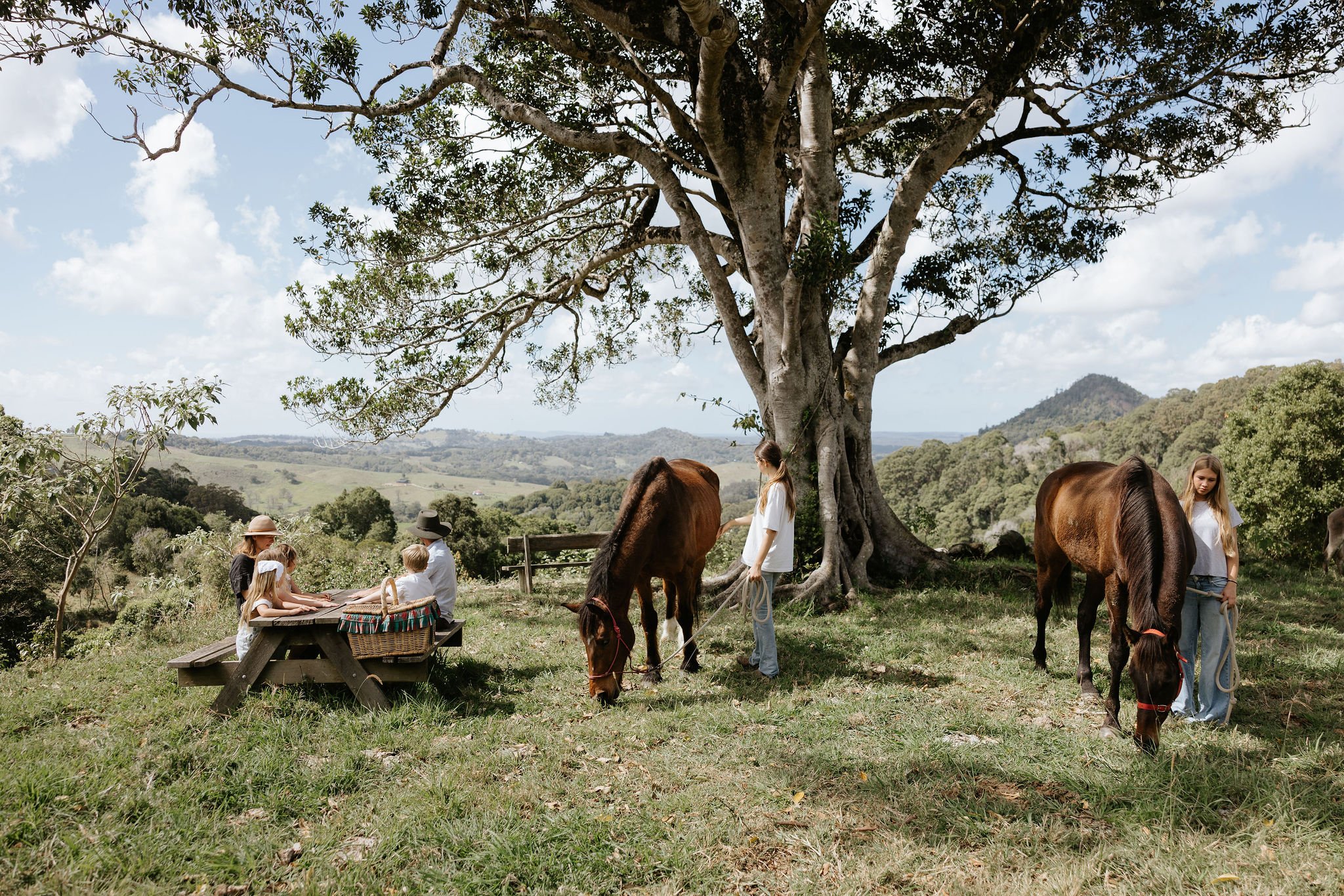
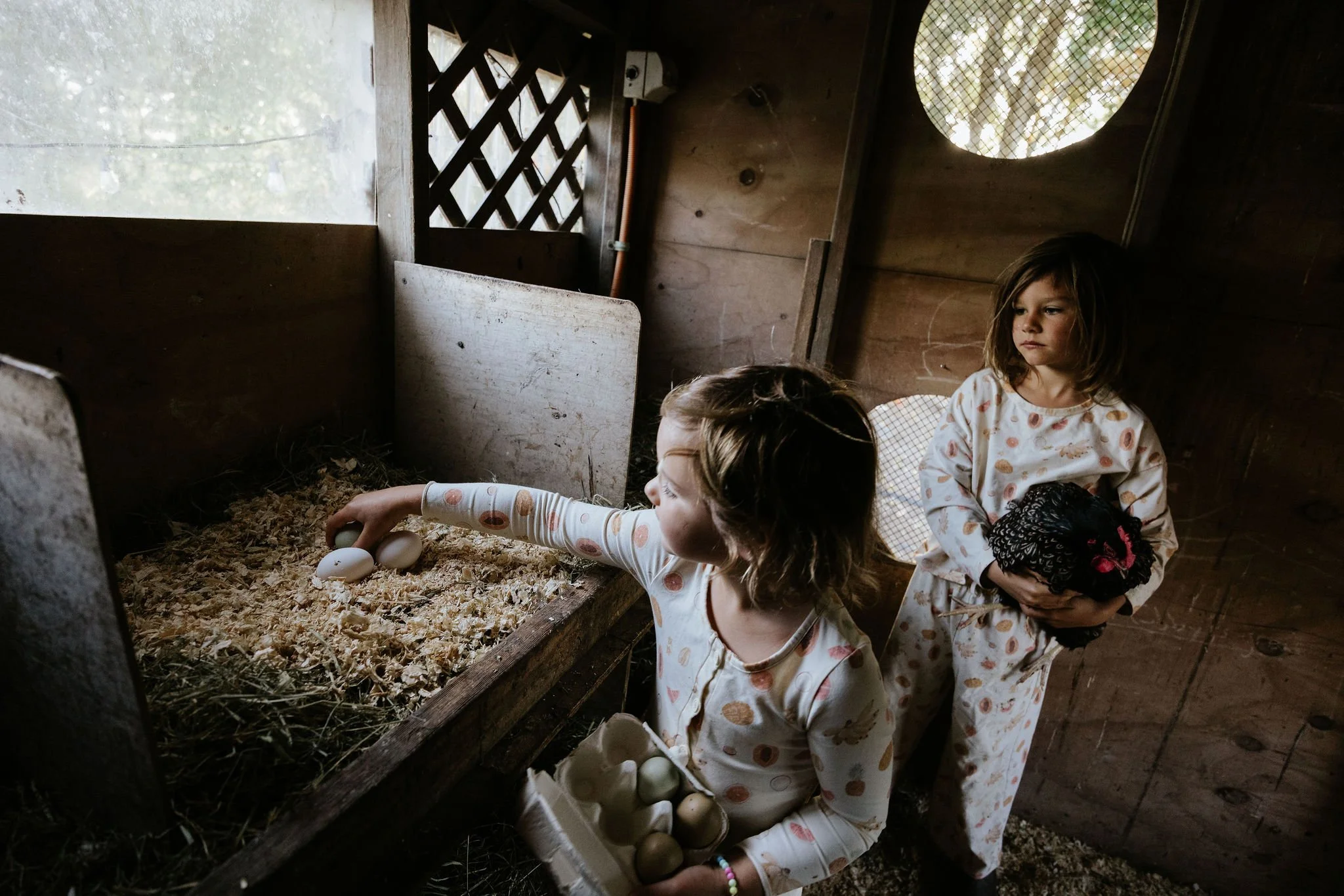
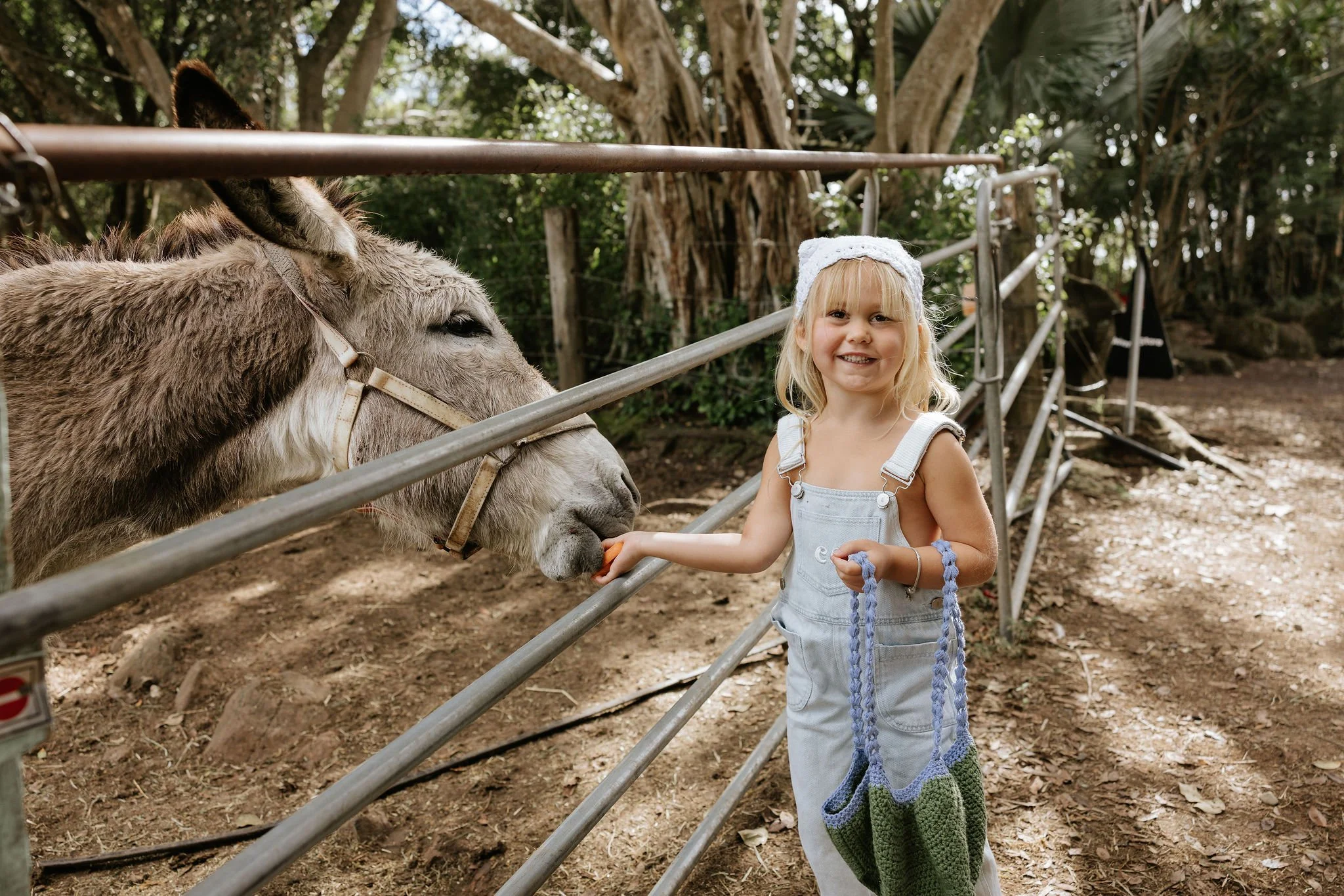
Rosecliffe is a family-run farm stay, and we live right here on the farm. Every morning at 8:30, guests join in the interactive animal feeding. Hand-feed the horses, mini ponies, donkey and alpacas, then collect fresh eggs from the coop. The peacocks and free-ranging chickens wander wherever they please.
Beyond the paddocks, there’s room to roam. Kids can run free across open fields, and Upper Pinbarren Creek winds through the property. In the conservation area you might meet pademelons, red-necked wallabies, echidnas and goannas. Look up for Wedge-tailed Eagles, and between August and September, watch for fireflies after dark.
Rosecliffe sits right on the Noosa Trail Network, with Trails 2 and 3 running along the property. You can head out on foot, by mountain bike or on horseback straight from your door, all the way into Woondum National Park.
High on the hill stands a grand old native fig tree that has watched over the valley for generations. Spread a rug beneath its sprawling branches for a picnic with a view. It has even set the scene for a proposal or two.
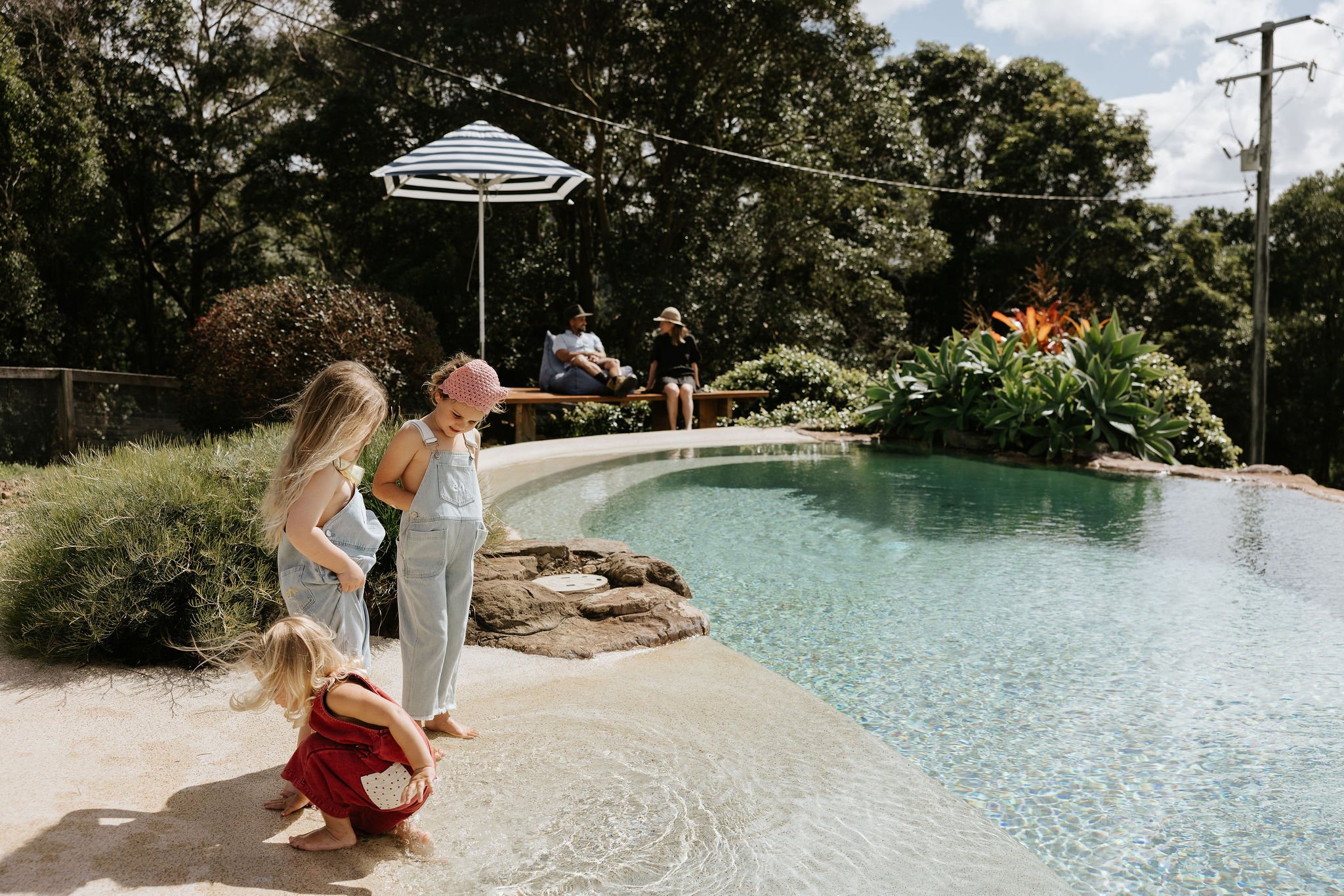
On warm days, the infinity pool is the place to be, with lounges and views over the valley all the way to the ocean. When the sun goes down, you can gather around the communal fireplace. We supply the firewood, so all you need to bring is the marshmallows.
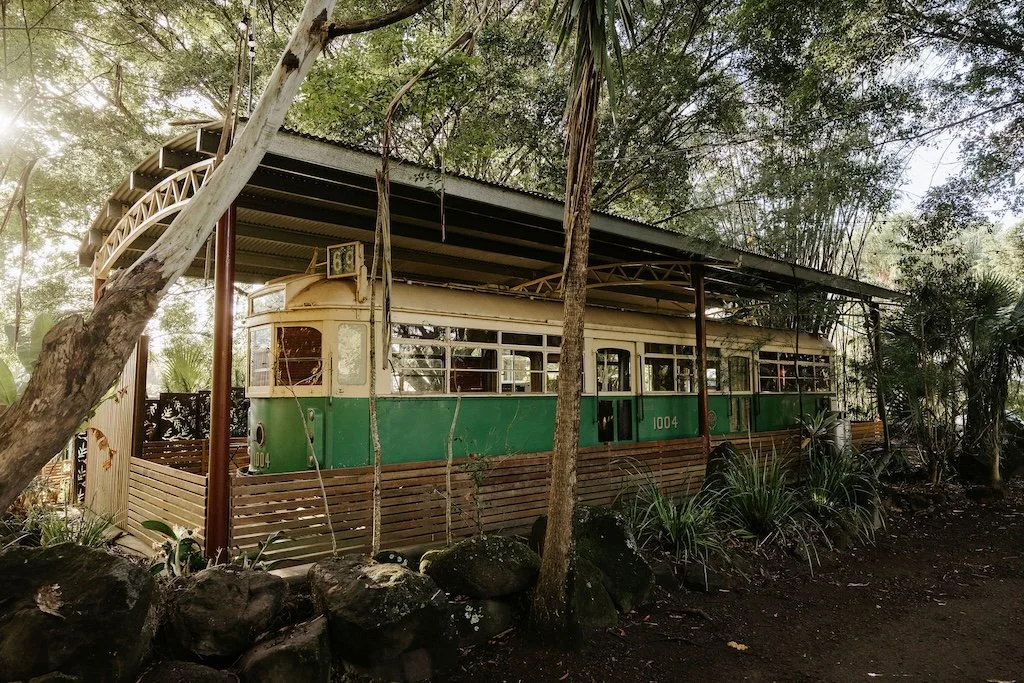
Rosecliffe has three very different places to stay: a hillside hideaway cottage, a heritage Sydney bus and a vintage Melbourne tram. Whichever you choose, this is a place made for families to slow down and spend time together.
A Bit of History
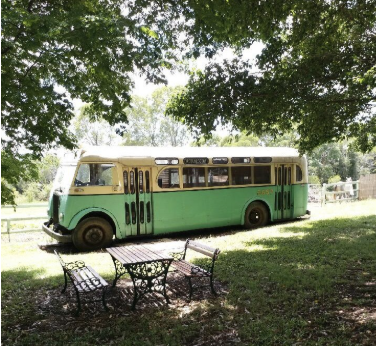
As well as its beautiful setting, Rosecliffe is home to two truly one-of-a-kind stays: the Bus and the Tram. Both spent decades on the streets of Sydney and Melbourne before the original owners of Rosecliffe rescued, restored and gave them a new purpose here on the farm. For those who love a historical fun fact, here’s the story behind each one.
The Bus: Leyland No. 2657
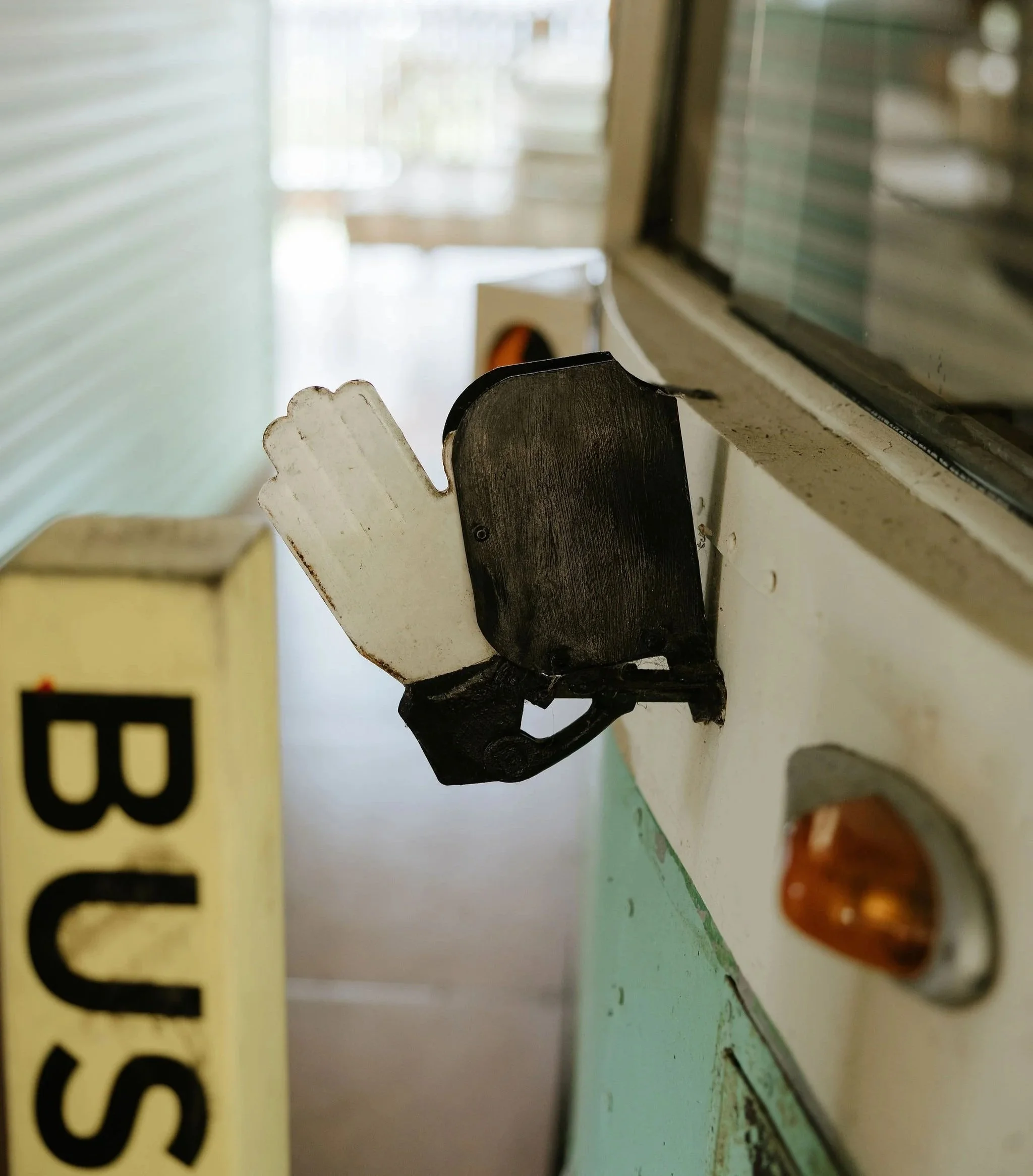
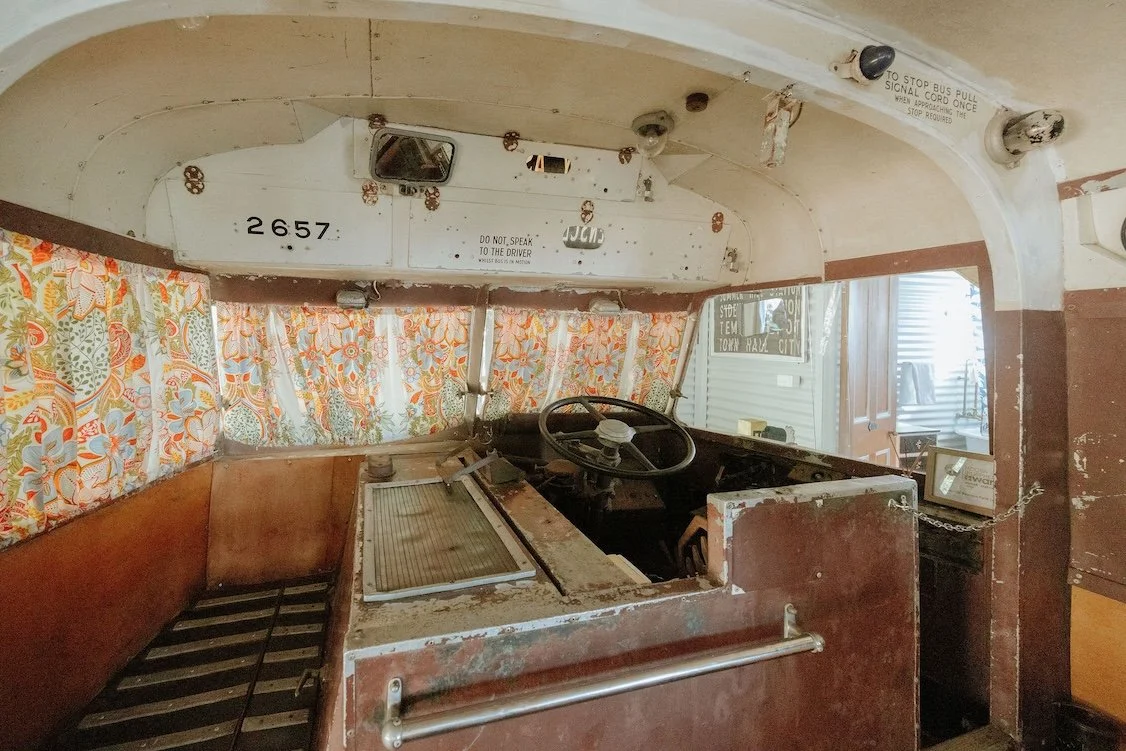
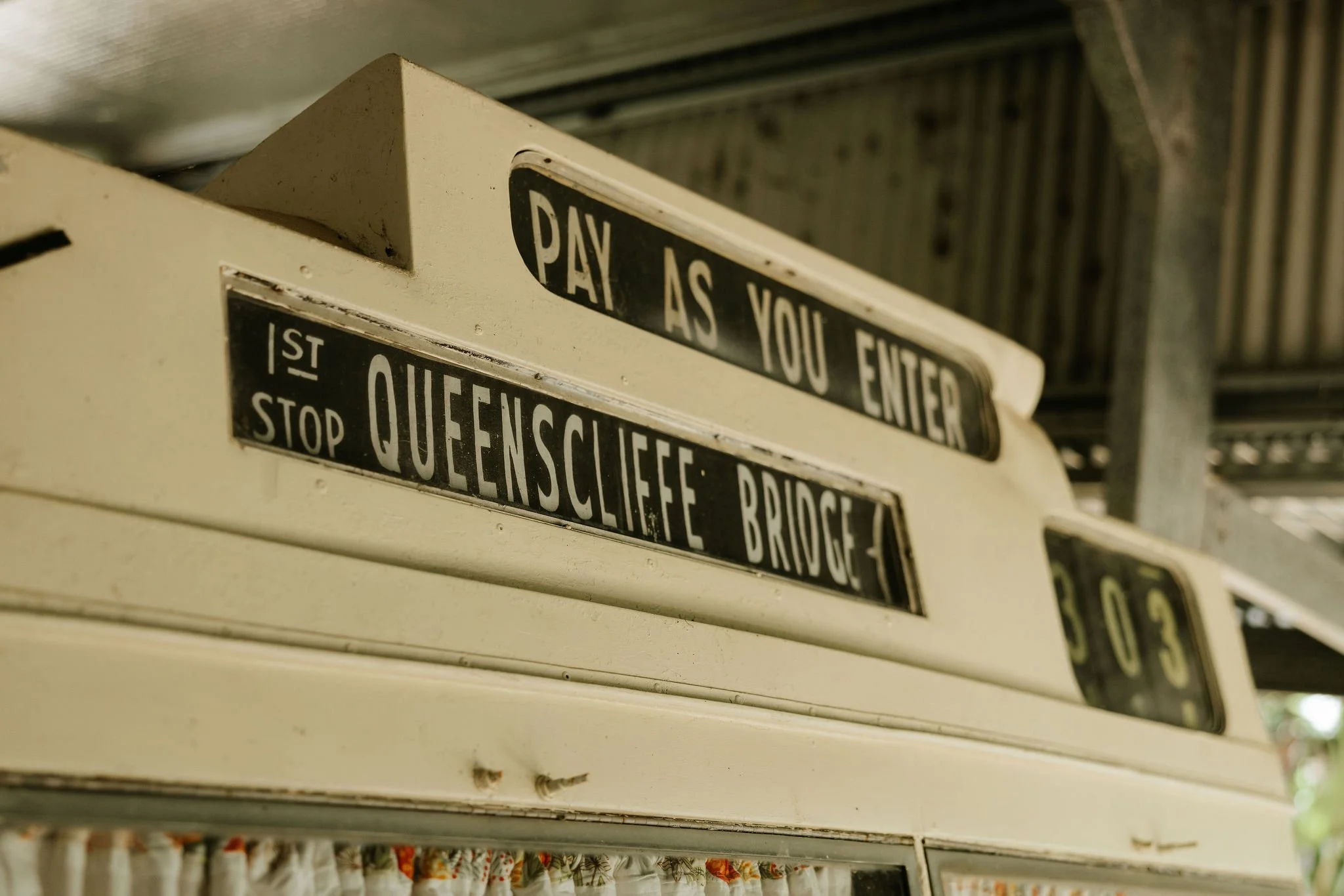
The bus is a 1952 Leyland OPS2/1, bodied by Commonwealth Engineering in Granville. It was one of just 50 built for Sydney, known as the “31-seaters,” with seats for 31 and standing room for 23 more. They were unusual from the start. Sydney ordered them with pre-selector gearboxes and air brakes, which Leyland didn’t normally fit to its front-engined buses.
No. 2657 entered service on 19 September 1952. It ran route 303 out of Circular Quay and Central Station. On big days, it was called up for “Special Workings,” taking crowds to cricket and football matches, the Easter Show and the Randwick Races. It retired in February 1974 after more than 20 years on the road.
Under the guidance of the Sydney Bus Museum, the original owners of Rosecliffe restored it to the condition you see today, sourcing rare genuine parts as they became available.
Specifications
Engine: Six-cylinder Leyland O.600 diesel, 4.8" bore × 5.5" stroke, 125 brake horsepower
Transmission: Four-speed Wilson pre-selector gearbox to a worm-drive differential
Brakes: Air-operated footbrake, with a mechanical handbrake on the rear wheels
The Tram: W Class No. 1004
Built in 1955, Tram 1004 ran Melbourne’s iconic Spencer Street to St Kilda line until it was retired in 1992. The original owners of Rosecliffe made a submission to Victoria’s transit authority, and the tram was granted to Rosecliffe. They then restored it with the help of Bendigo Tramways and the Newport Workshops.
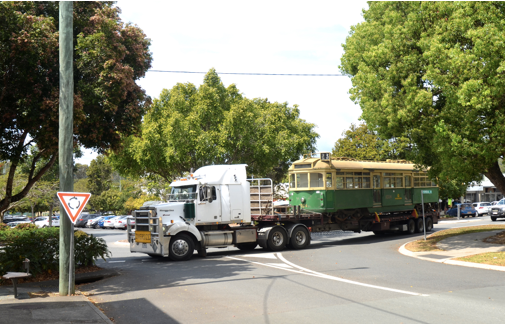
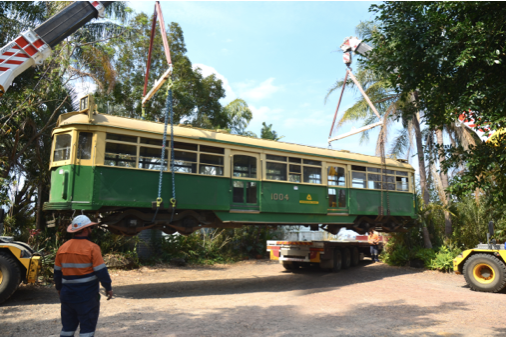
Getting it here was a feat in itself. The tram weighs 17 tonnes, but most of that sits in the bogies. The body is timber with a canvas roof, so it could have cracked in half if it flexed during lifting. Two cranes lifted it onto a long loader in Melbourne. The driver then steered around trees, powerlines, tight turns and dips all the way north. It arrived in November 2020, and two more cranes lowered it precisely onto eight points of a reinforced concrete pad.
Then the real work began. Decades of city grime were scrubbed away, revealing the original tramways logo hiding under later stickers. Local engineer Greg Nuski designed and built its protective roof, which echoes Flinders Street Station. Electrical engineer Brian Williams brought the original lighting back to life. While the tram was in storage, thieves had stripped its brass handrail brackets. Winton Castings and Bendigo Tramways helped cast perfect replicas from the original blueprint.
Today the tram is fitted out in the style of a first-class railway saloon, with Art Deco pieces and a claw-foot bath. We hope you enjoy it as much as we do.